
3D Virtual Tours – Immersive Interactive Experiences for Architecture and Digital Showrooms
What Is a 3D Virtual Tour?
A 3D virtual tour is an interactive experience that allows users to explore a digital space as if they were physically inside it. Viewers can move between predefined positions, look around in full 360 degrees, and navigate both interior and exterior environments freely.
Unlike a video or linear animation, a virtual tour does not impose a fixed viewpoint or predefined narrative. The user decides where to look and how to move through the space. This transforms visualization from a passive presentation into an active, immersive experience.
3D virtual tours are especially valuable in architecture, real estate development, product showrooms, commercial spaces and industrial environments, whether the project already exists or is still in development.
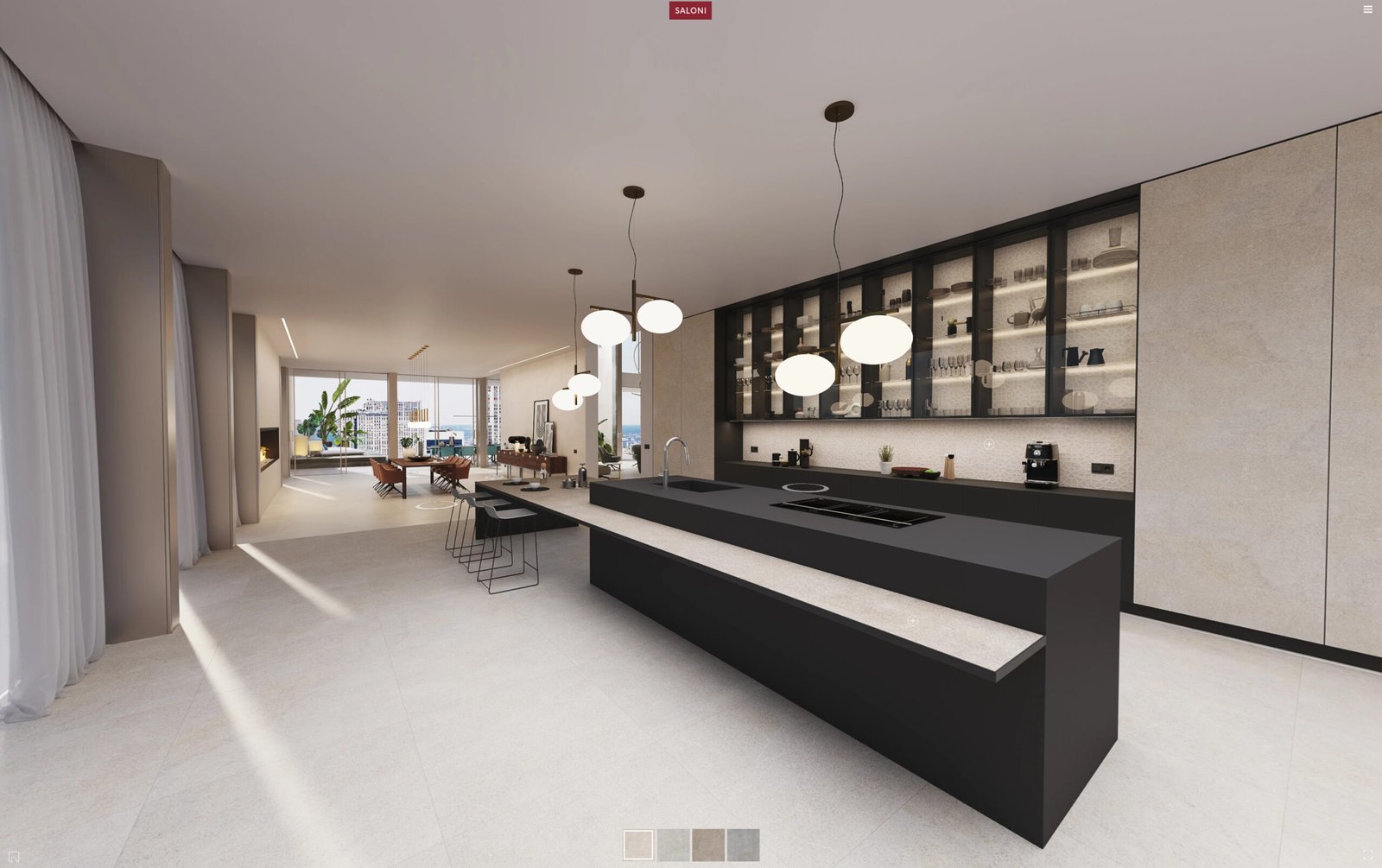
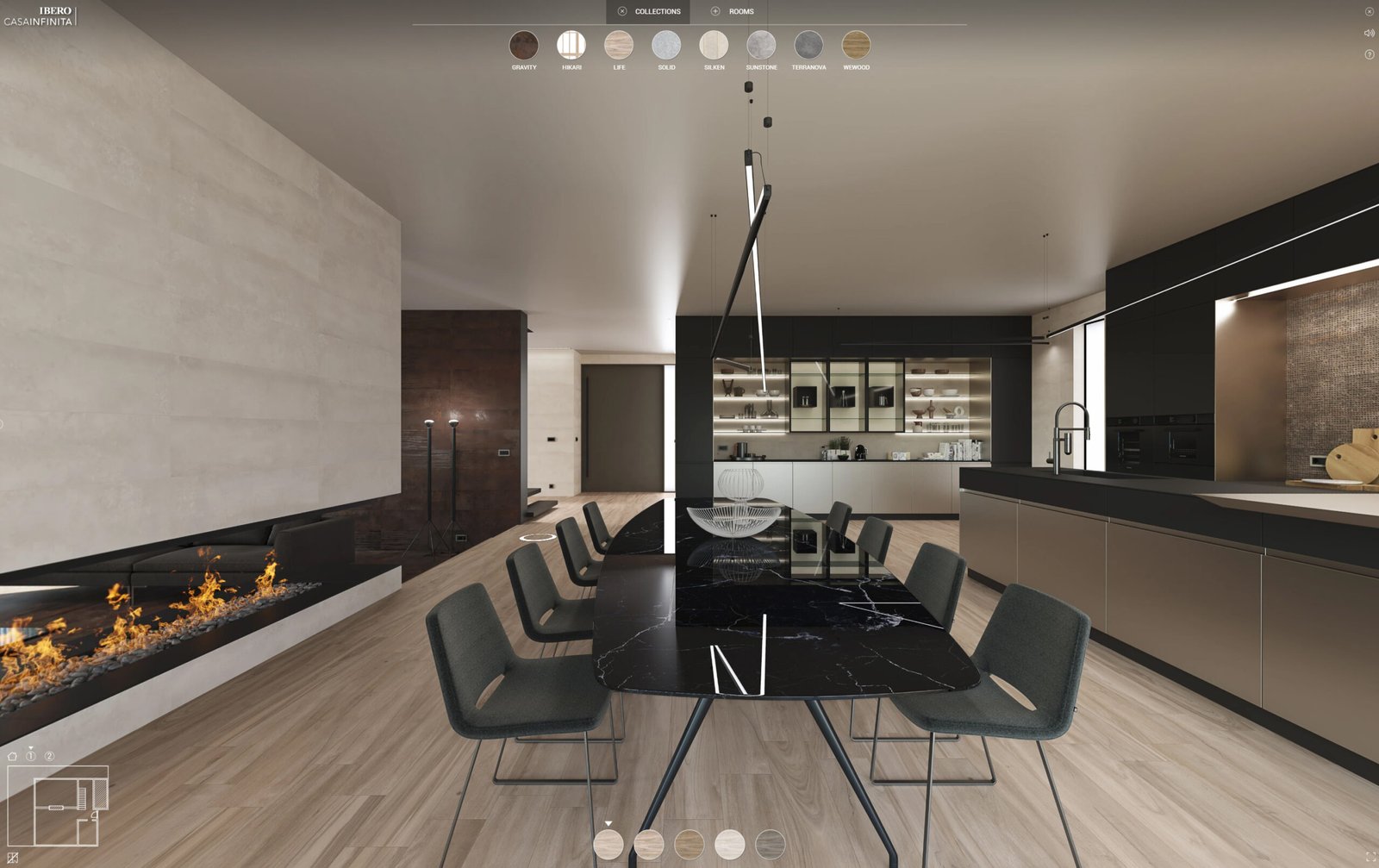
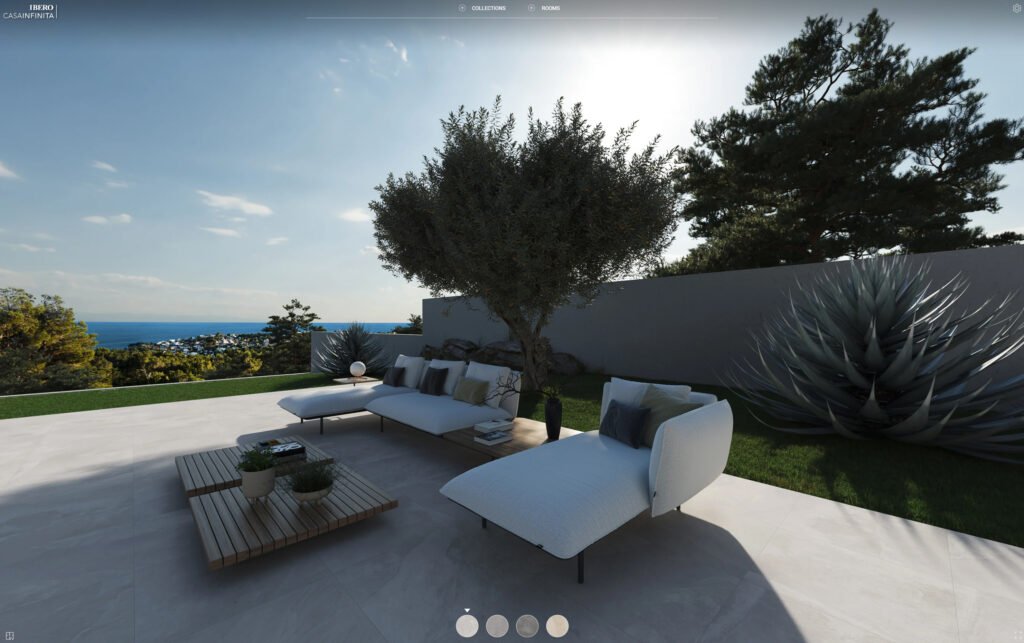
How Mimetry Develops 3D Virtual Tours
At Mimetry, we primarily create virtual tours using high-end 3D rendering. This approach provides complete creative and technical control, allowing us to recreate existing buildings or design entirely new spaces when the project has not yet been built, when renovations are planned, or when multiple configurations need to be presented.
The process begins with the full digital construction of the environment to be explored. We do not model only what appears in a single camera view; we build everything that may be visible from the 360° viewpoints. This includes architectural structure, construction details, furniture, decorative elements and exterior surroundings, all developed at real scale and with precision aligned to the project’s objectives.
Once the environment is completed, materials and lighting are carefully designed. Lighting is a critical factor. Virtual cameras behave like real photographic cameras: they capture how light interacts with surfaces. To achieve a realistic result, natural and artificial lighting must be balanced properly, along with overall exposure. The realism of a 3D virtual tour depends heavily on this technical control.
Camera Placement and Navigation Logic
After the space has been fully defined, we strategically determine where each 360° camera will be positioned. Every camera represents a navigable viewpoint from which the user can explore the environment.
Navigation does not function like a real-time video game. Instead, movement occurs between predefined camera positions. For this reason, camera planning is essential. From each point, users should clearly understand where they can move next, and the spatial relationship between positions must feel coherent and natural.
Careful navigation design enhances continuity, improves spatial understanding and strengthens the overall realism of the virtual experience.


Strategic Planning Before Production
Before production begins, it is essential to define what the virtual tour is meant to achieve and who it is intended for. A commercial digital showroom requires a different approach than an architectural presentation aimed at investors or stakeholders.
This early planning stage determines the level of detail required, the number of camera positions, which areas must be modeled, and which interactive features will be integrated. In practice, strategic planning shapes both the technical development and the project scope.
An effective 3D virtual tour is not simply a sequence of panoramic views. It is a communication tool designed with a clear purpose.
Interactive Features
A 3D virtual tour can incorporate multiple levels of interactivity. Informational hotspots can be added to specific elements within the space, expanding the experience with technical descriptions, image galleries, videos or links to product pages.
Advanced navigation tools such as interactive floor plans, direct room access or structured menus can also be integrated. These features are particularly useful in complex buildings or large-scale commercial environments.


Configurable Virtual Tours
At Mimetry, we go beyond static visualization. We develop configurable virtual tours that allow users to modify the environment in real time. Materials, finishes, colors, surface coverings and lighting conditions can be adjusted dynamically, including simulations of daytime and nighttime scenarios.
This transforms the virtual tour into a powerful commercial tool. A digital showroom can become an interactive product catalog where users visualize multiple combinations in a realistic environment, gaining a clearer understanding of the final result before making decisions.
Integrated Motion and Animation
In addition to camera navigation, motion can be integrated within the environment. Specific elements can activate automatically or through user interaction, demonstrating product functionality, opening systems, mechanical movements, water effects or dynamic lighting.
The integration of animation within a virtual tour expands both narrative and technical possibilities. Combining virtual tour navigation, configuration systems and animation creates a richer and more distinctive immersive experience.


Integration and Strategic Applications
A virtual tour does not need to exist as a standalone experience. It can be integrated into a corporate website, connected to registration systems, linked to quotation forms or enhanced with usage analytics to monitor user behavior.
In this way, a 3D virtual tour becomes not only a visualization tool, but also a strategic asset that combines communication, engagement and commercial conversion.
Why Mimetry Develops Different 3D Virtual Tours
Our expertise in 3D rendering, advanced lighting, animation and interactive systems allows us to approach virtual tours from a highly technical perspective.
We do not simply generate 360° panoramas. We design coherent environments with balanced lighting and carefully planned navigation aligned with the project’s objectives.
Each 3D virtual tour is conceived as a precise communication tool, built not just to show a space, but to express a clear intention.

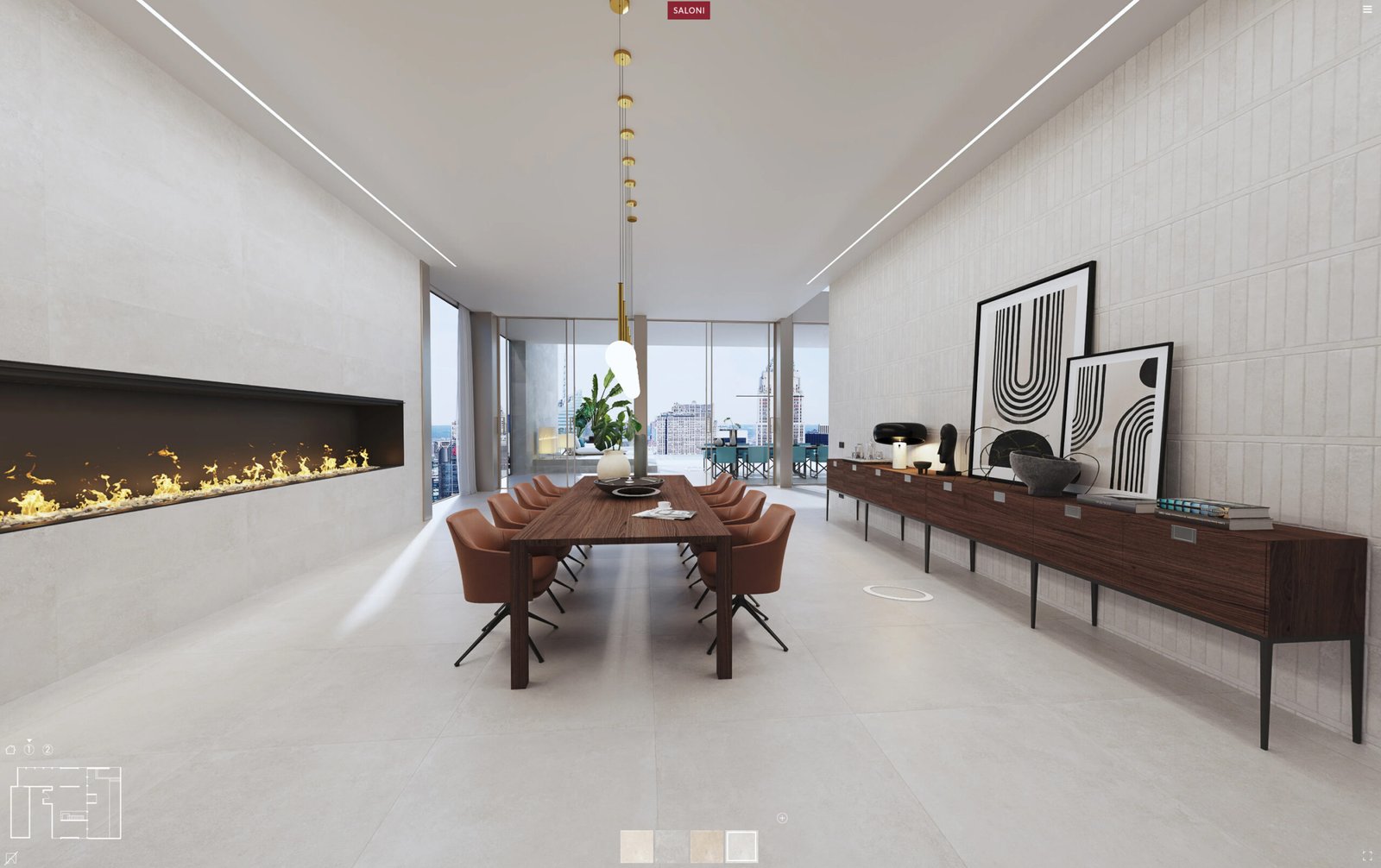

FAQ – 3D Virtual Tours
3D virtual tours often raise questions related to production, performance and practical applications. Below are answers to the most common concerns, based on our experience developing professional virtual tours for architecture, industry and digital showrooms.
What is the difference between a 3D virtual tour and an architectural video?
A 3D virtual tour allows users to explore the space freely, choosing where to look and how to move. An architectural video follows a predefined camera path. Virtual tours offer greater flexibility and interaction, making them more effective for digital showrooms, architectural presentations and commercial communication.
Can a virtual tour be created if the building has not been constructed yet?
Yes. One of the key advantages of a rendered 3D virtual tour is that it can be developed directly from architectural plans or technical models before construction begins. This makes it ideal for real estate marketing, renovation projects or industrial facilities that need to be presented with high visual realism.
Do 3D virtual tours affect website performance?
When properly optimized, a 3D virtual tour does not compromise website speed. At Mimetry, we carefully manage resolution, compression and file structure to ensure smooth performance across desktop, tablet and mobile devices. The balance between visual quality and technical efficiency is considered from the earliest production stages.
Can configuration systems be integrated into a virtual tour?
Yes. A virtual tour can incorporate configurable systems that allow users to change materials, finishes, lighting conditions or layout options. Mimetry develops interactive digital showrooms where multiple combinations can be visualized in real time, turning the experience into a highly effective commercial tool.
How long does it take to develop a 3D virtual tour?
Production time depends on the size of the environment, the required level of detail, the number of camera positions and the complexity of interactive features. A high-quality 3D virtual tour requires careful planning, complete modeling and refined lighting. At Mimetry, we prioritize realism and technical precision to deliver solid, immersive results.
Can a virtual tour be updated after publication?
Yes. When the environment is built in 3D, materials, configurations or features can be updated while maintaining overall coherence. We plan projects so they can evolve over time, allowing digital showrooms to adapt to new collections, architectural changes or future commercial needs.
Which industries benefit most from 3D virtual tours?
3D virtual tours are particularly effective in architecture, real estate development, material manufacturing, interior design, lighting and industrial sectors. Any industry that needs to present spatial environments or applied product solutions can benefit from an immersive, interactive digital experience.
Can a virtual tour be integrated into a digital sales strategy?
Absolutely. A 3D virtual tour can be integrated into corporate websites, marketing campaigns or private distributor platforms. It may include user registration, quotation requests and analytics tracking. At Mimetry, each virtual tour is conceived as a strategic tool that combines visualization, interaction and commercial conversion.
What differentiates Mimetry from other virtual tour providers?
The difference lies in our technical approach. We do not simply produce 360° panoramas. We build environments with architectural precision, design balanced lighting systems and plan navigation strategically. The result is a coherent, realistic and commercially aligned 3D virtual tour that stands apart from generic solutions.