Configurable 3D Virtual Tours: The Future of the Digital Showroom
From Static Spaces to Dynamic Environments
For years, the digital showroom has been conceived as a static representation of a space. Carefully designed, visually polished and technically precise, yet fundamentally fixed. Users could navigate through it, observe products and, at best, access additional information through interactive hotspots.
Today, that concept is evolving.
Advances in 3D visualization and interactive technologies have transformed the digital showroom into something far more powerful. A configurable 3D virtual tour does not simply display a space — it allows it to change in real time according to the user’s decisions.
This shift represents more than a technical upgrade. It redefines how products, materials and architectural solutions are presented in digital environments.
The showroom becomes a flexible commercial tool rather than a static visual container.


What Is a Configurable 3D Virtual Tour?
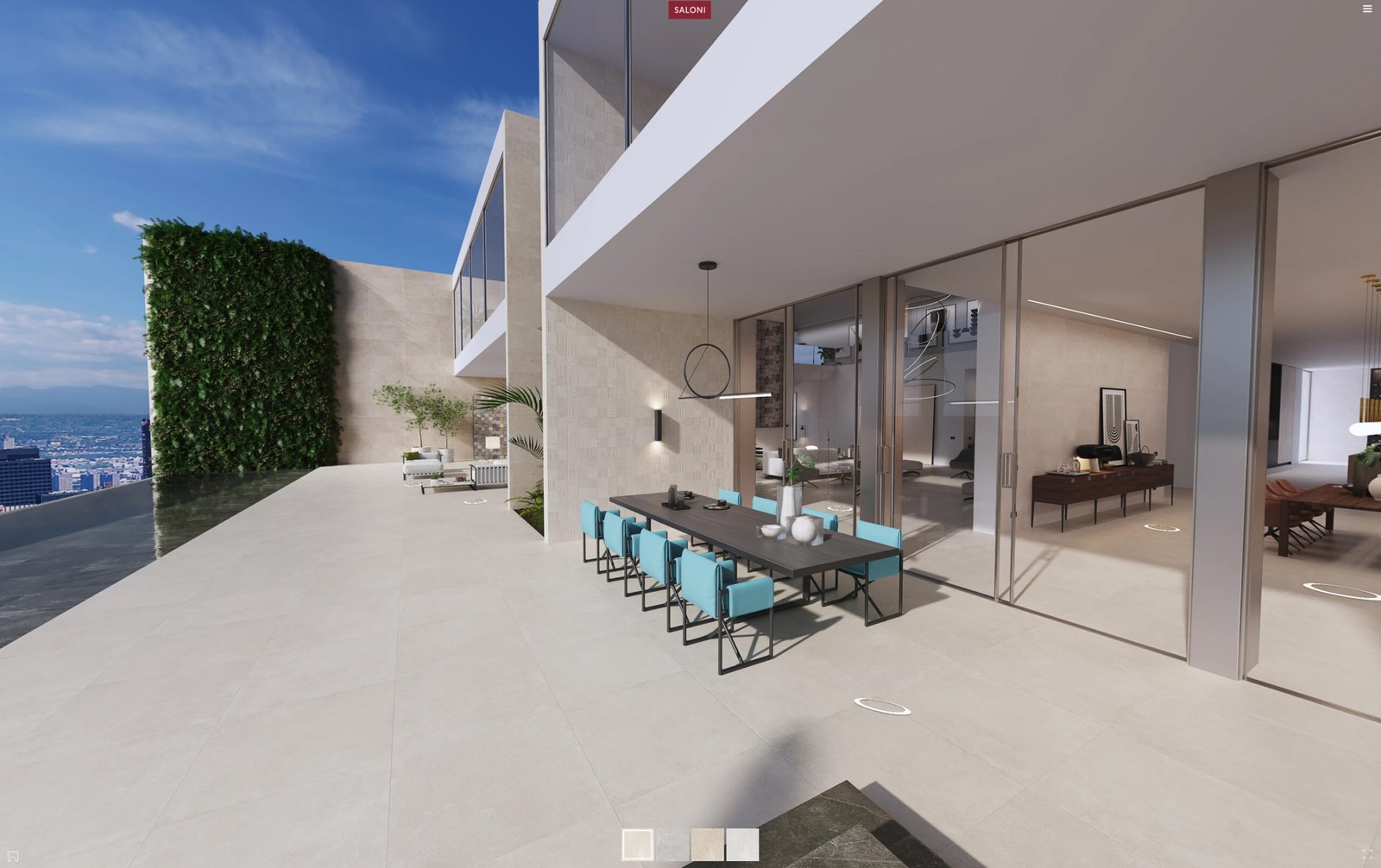
A configurable 3D virtual tour is an immersive digital environment where selected elements can be modified dynamically during navigation.
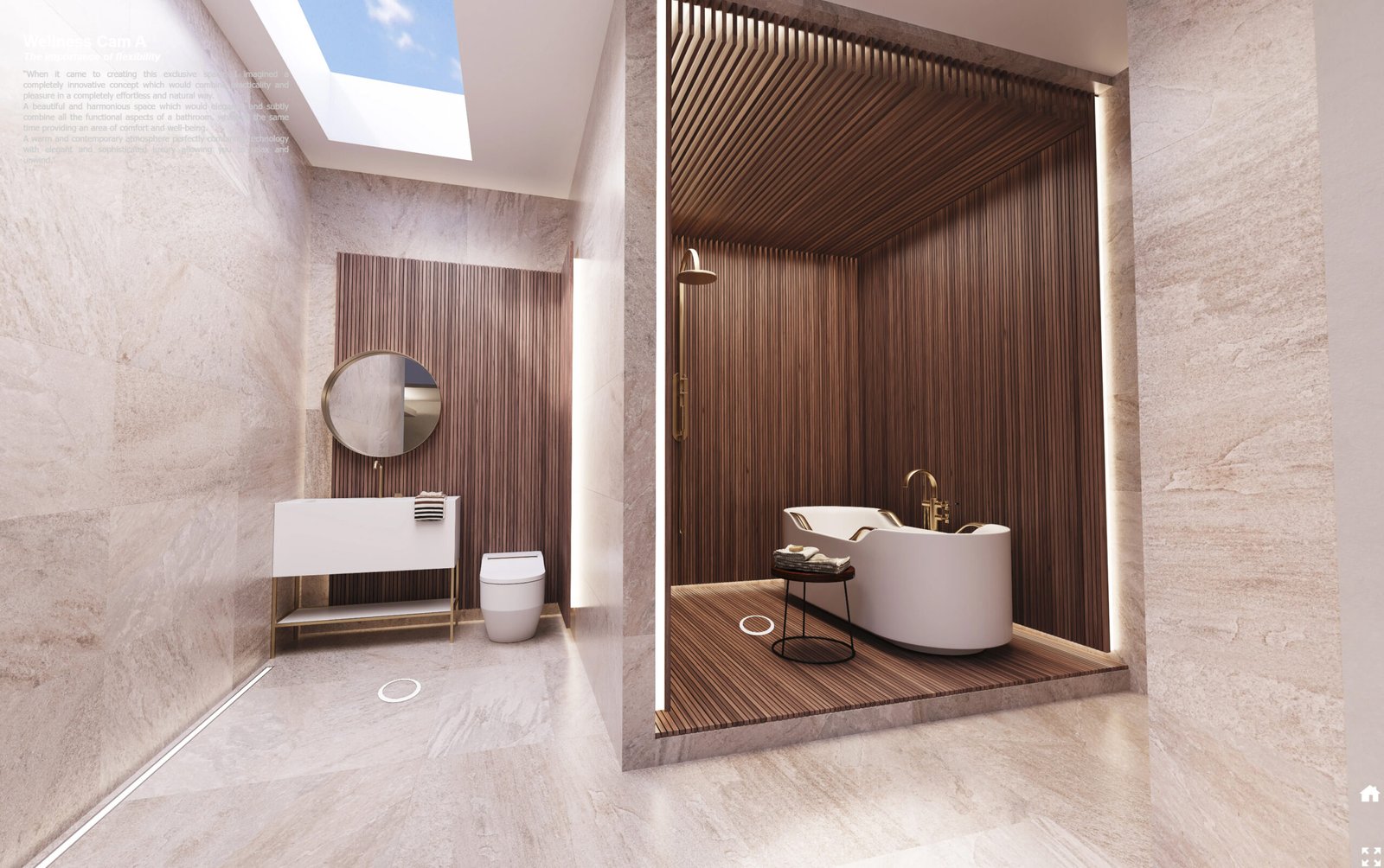
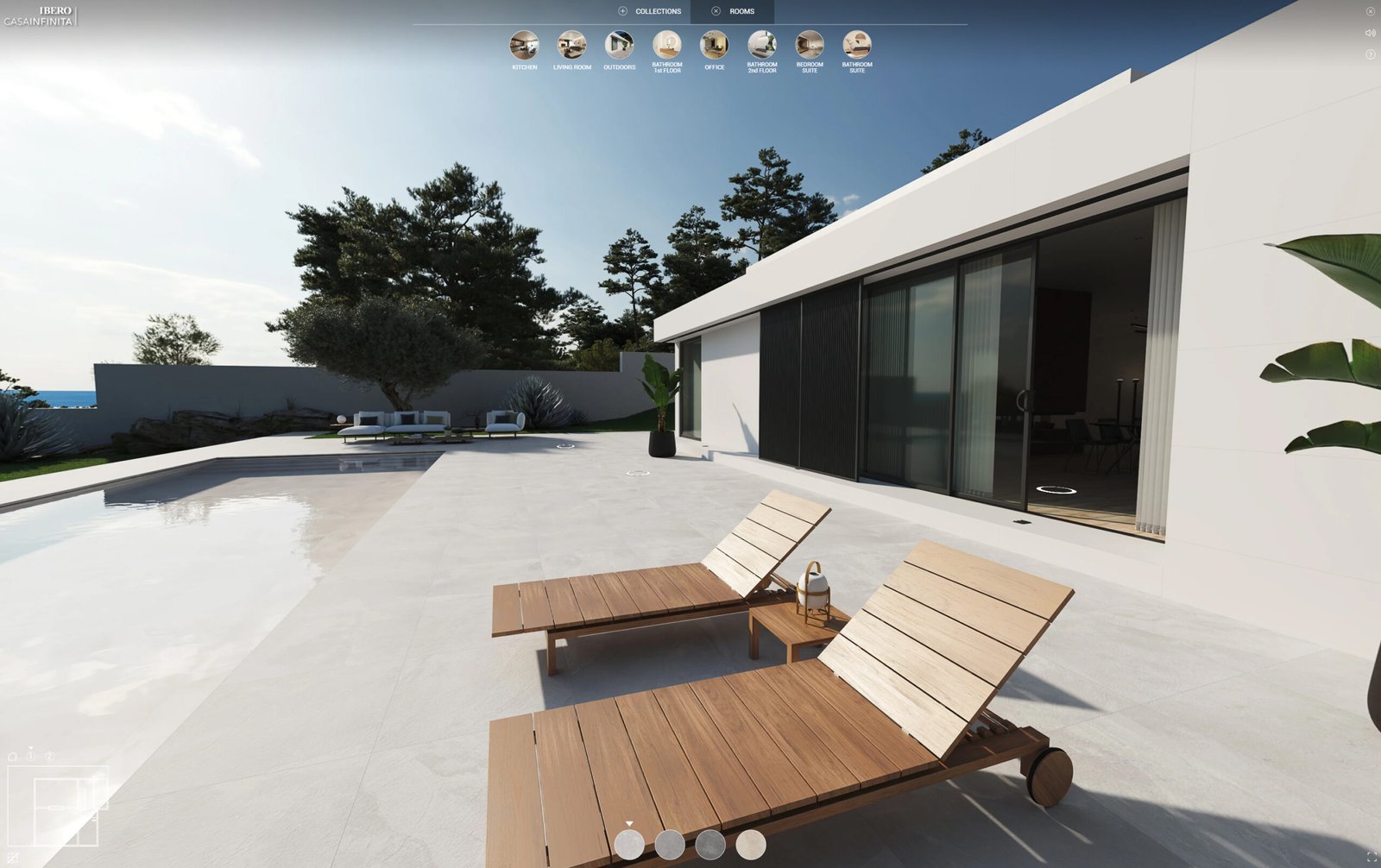
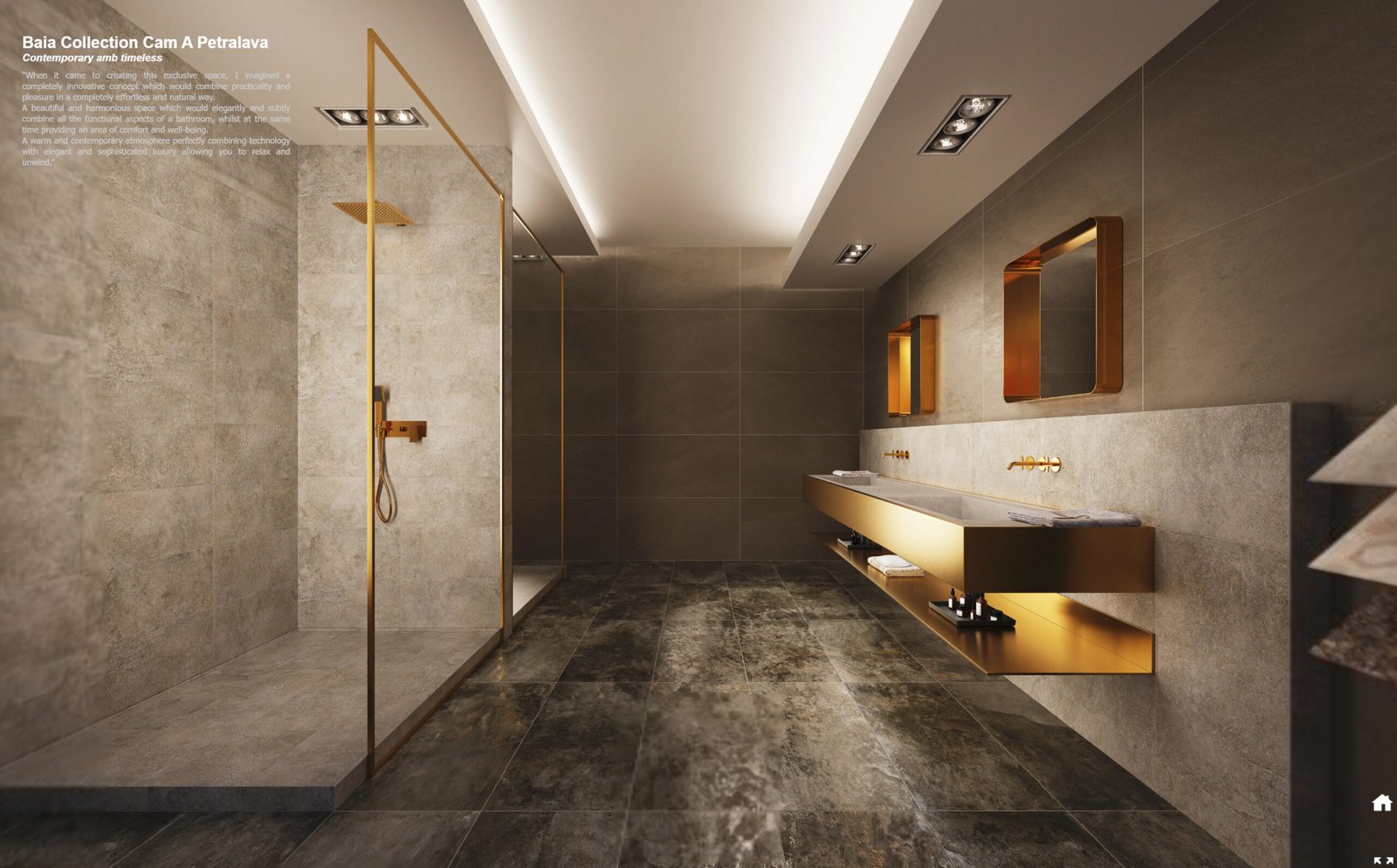
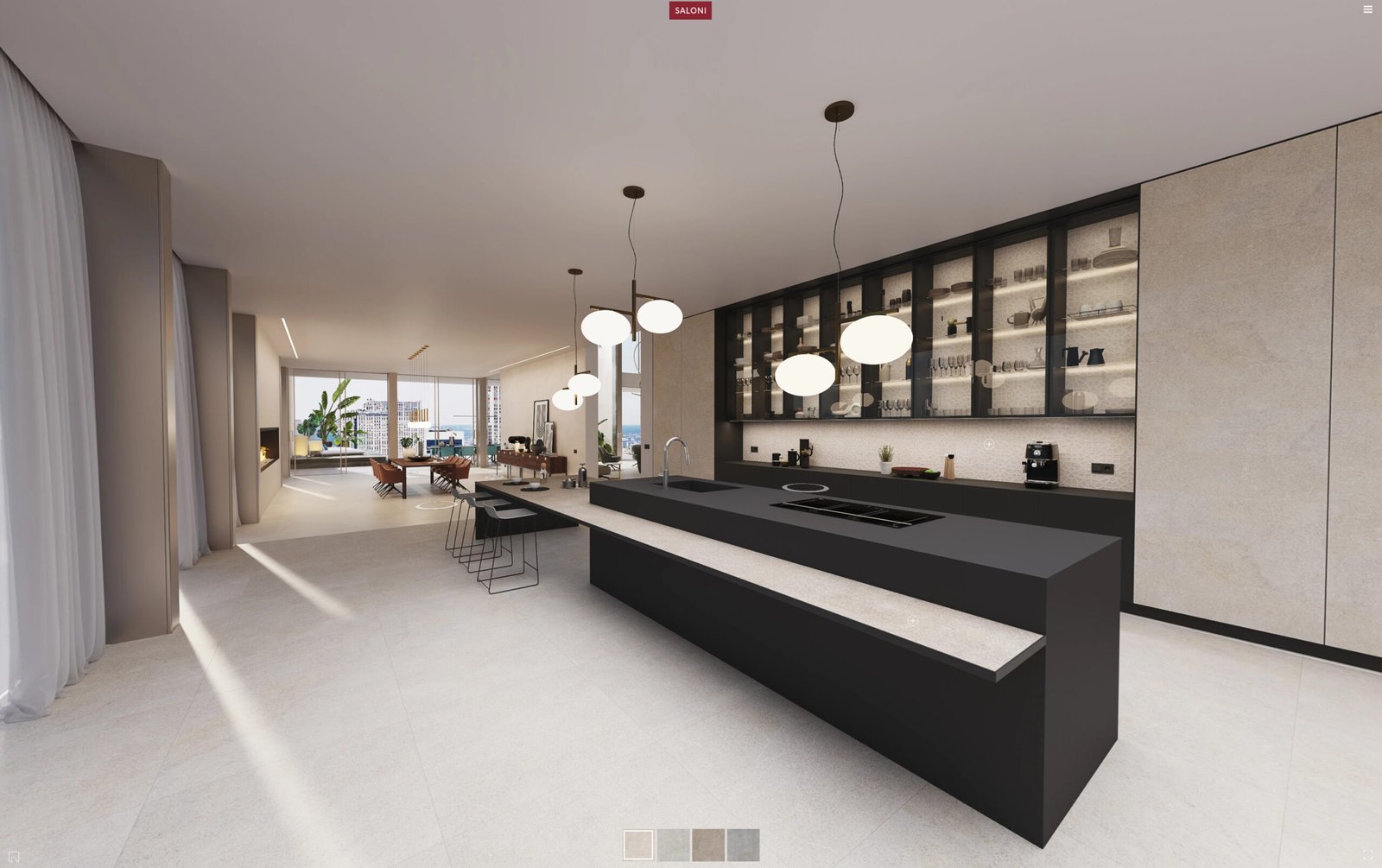
Instead of presenting a single fixed scenario, the user can adjust finishes, materials, colors, lighting conditions or product configurations within the same spatial context.
This interactivity transforms passive viewing into active exploration. The user does not simply observe the space — they shape it visually.
For industries such as ceramics, bathroom fixtures, furniture, lighting, construction materials or industrial systems, this capability is particularly valuable. Purchasing decisions often depend on how specific combinations perform within a realistic setting.
A configurable virtual tour removes abstraction. It allows potential clients to see options applied directly in context.
From Traditional Catalog to Interactive Showroom
Manufacturers have traditionally relied on printed catalogs, static renders or isolated product photography to present variations. Each alternative required separate visual production, increasing time and cost.
A configurable digital showroom restructures this logic.
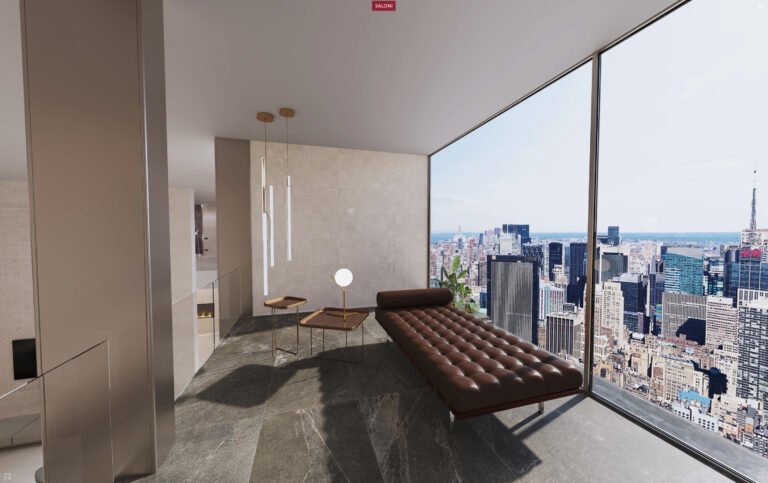
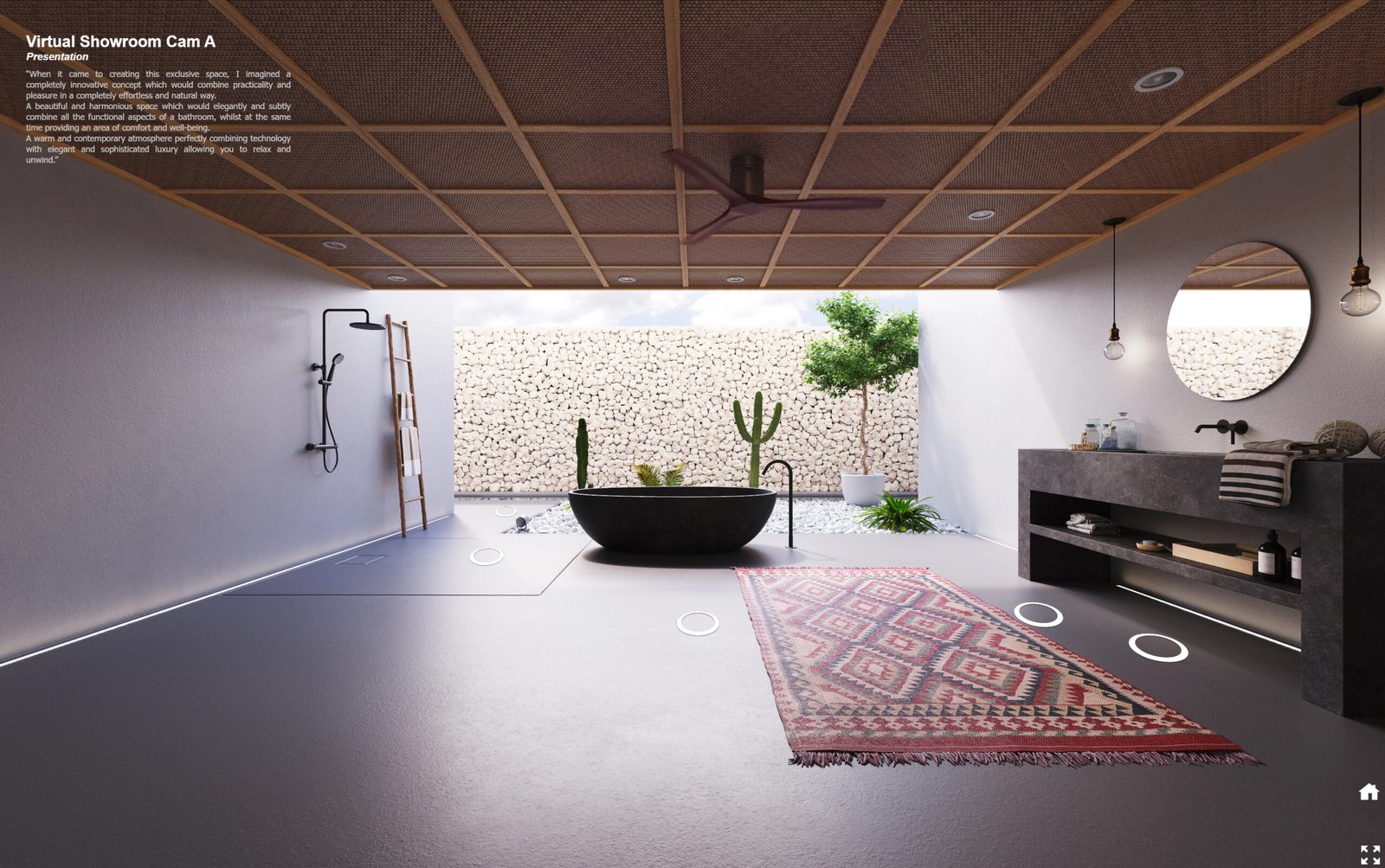
Instead of producing individual visuals for every variation, multiple options coexist within the same environment. The user can explore a residential interior, office space or commercial setting while testing different material combinations or product finishes.
The product becomes part of a coherent atmosphere rather than an isolated sample.
This approach is not only more efficient. It is strategically stronger.
Supporting Informed Decision-Making
One of the most common challenges in commercial presentations is helping clients visualize the final result.
A tile sample, lighting fixture or surface finish may appear appealing in isolation, but its impact changes when integrated into a complete environment.
A configurable 3D virtual tour enables side-by-side comparison within consistent lighting and spatial conditions. This coherence reduces uncertainty.
When clients can evaluate alternatives in a realistic context, decisions become more confident and better justified.
The digital experience becomes a decision-support system rather than a promotional display.
Personalization as a Competitive Advantage
Customization has become a defining expectation across industries. Clients increasingly seek solutions tailored to their preferences.
A configurable virtual showroom allows brands to offer personalization without producing multiple independent scenes.
From a commercial perspective, this communicates flexibility, innovation and customer orientation.
At Mimetry, we design configurable 3D virtual tours as strategic assets that reinforce the relationship between product and environment while maintaining visual coherence and high production quality.
The objective is not simply to add options, but to integrate them meaningfully into the overall experience.
Beyond Material Changes
While material switching is a common application, configurable virtual tours extend far beyond finish variations.
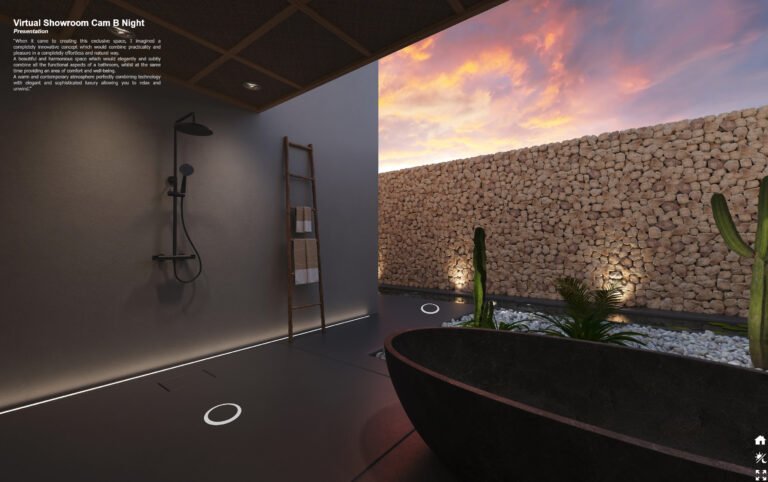
Lighting conditions can be adjusted to simulate daytime, evening or artificial lighting scenarios. Different atmospheres can be activated to demonstrate mood changes. In technical contexts, product mechanisms or installation configurations can be visualized in alternative states.
The value lies not in the number of features, but in their relevance.
Every interactive option must serve a communicative purpose aligned with the project’s commercial goals.
Strategic restraint is as important as technological capability.
Immersion and Brand Differentiation
In competitive markets, differentiation is critical. A visually impressive showroom may attract attention, but a configurable 3D virtual tour adds a deeper level of engagement.
When users actively modify the environment, they become participants rather than spectators.
This increases time spent interacting with the brand and strengthens memory retention.
From a positioning standpoint, a configurable digital showroom signals technological leadership and innovation.
At Mimetry, we approach these projects with structural planning and long-term perspective, ensuring that immersive impact never compromises clarity or stability.
Integration into Digital Strategy
A configurable 3D virtual tour is not a standalone element. It can be integrated into corporate websites, distributor platforms, trade show presentations or international marketing campaigns.
Its adaptability allows the digital showroom to evolve alongside new product collections or updated branding strategies.
When strategically designed, it becomes a scalable commercial asset rather than a one-time visual production.
This long-term perspective maximizes return on investment and reinforces digital transformation efforts.

Mimetry’s Approach
Developing a configurable virtual tour is not about simply enabling switches or visual changes. It requires conceptual clarity, spatial coherence and technical robustness.
At Mimetry, we begin with strategic analysis. We examine brand positioning, product complexity and target audience before defining the showroom structure.
Our objective is not to create technological spectacle, but to deliver an immersive commercial tool aligned with business goals.
The digital showroom is no longer static. It is a dynamic, interactive environment capable of adapting to the user — and strengthening purchasing confidence.
FAQ – Configurable 3D Virtual Tours
What is the difference between a traditional virtual tour and a configurable one?
A traditional virtual tour presents a fixed environment. A configurable 3D virtual tour allows selected elements — such as materials, finishes or lighting — to be modified dynamically within the same space, creating a personalized experience.
Are configurable tours particularly useful for manufacturers?
Yes. They allow manufacturers to present multiple product combinations in realistic settings, helping clients visualize final results more clearly and supporting confident purchasing decisions.
Do configurable tours increase project complexity?
They require structured planning and strategic design. When developed correctly, they maintain stability and usability while offering advanced interaction. Proper conceptualization is essential from the outset.
Can a configurable virtual showroom be updated over time?
Yes. When strategically structured, new materials, collections or configurations can be incorporated without rebuilding the entire environment.
Do configurable tours replace traditional catalogs?
Not necessarily. They complement and expand traditional presentation tools by transforming static product information into interactive, immersive experiences.