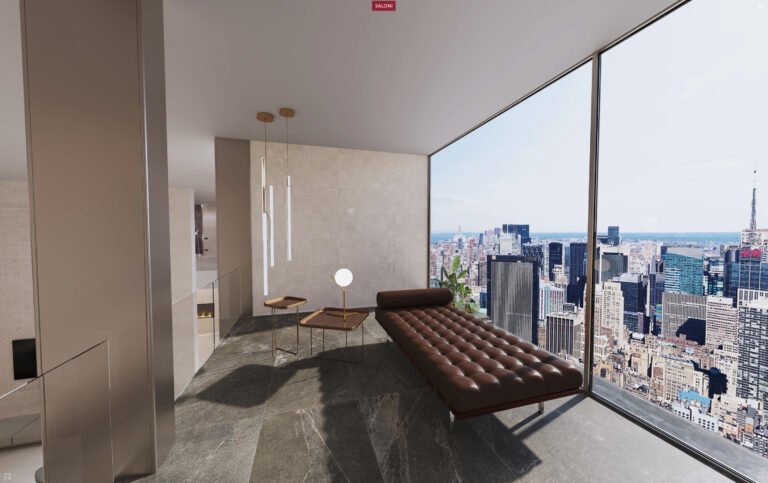
3D Rendering for Living Room Furniture, Sofas, and Bedrooms: Realism Without Friction
The Visual Challenge of Residential Furniture
Living room and bedroom furniture must communicate volume, comfort, and material quality. Unlike other sectors, users evaluate sensations: texture, proportion, and how a piece occupies space.
Sofas, beds, and wardrobes also pose a technical challenge: they are large, difficult to transport, and complex to model with extreme accuracy if the wrong technique is chosen.
Common Product Types
In this sector, visualization projects typically involve:
- Sofas and armchairs
- Living room furniture
- Beds and headboards
- Complete bedroom sets
- Wardrobes and modular systems
Fully 3D Environments: Complete Control of the Space
For catalogs, campaigns, or full collections, fully 3D environments offer significant advantages.
They allow:
- Full control over lighting and camera
- Visual consistency across scenes
- Adaptation to different interior styles
- Reuse of the same space for multiple collections
This approach is especially effective for bedrooms and modular furniture systems.
Sofas and Complex Products: Integrated Photography
Sofas are among the most complex products to solve efficiently in pure 3D. Fabrics, folds, and organic volumes require extensive modeling time.
A common solution is to:
- Photograph the sofa at the client’s facilities
- Avoid costly transportation and setup
- Integrate the photograph into a 3D environment, real interior photo, or AI-generated image
This hybrid approach delivers maximum realism with optimized time and cost.
Combining with Real Photography or AI-Generated Images
Depending on the project, the environment may be created using:
- Real interior photography
- AI-generated environments
- Custom-designed 3D spaces
The Right Technique Depends on the Project
There is no single valid solution for residential furniture visualization.
The choice between:
- Full 3D rendering
- Photography
- AI-generated imagery
- Hybrid workflows
depends on factors such as number of products, variants, budget, timelines, and the required level of realism.
Visual Consistency Across Collections and Catalogs
One of the main benefits of rendering and hybrid solutions is visual consistency.
They make it possible to:
- Maintain consistent proportions and camera angles
- Unify lighting and atmosphere
- Expand collections without recreating scenes
- Adapt visuals to different markets
This is especially valuable for brands with extensive catalogs.
A Professional Approach to Furniture Visualization
At Mimetry, furniture visualization projects are approached on a case-by-case basis. The most efficient technique is selected for each product, combining methods when necessary to achieve realistic, coherent images ready for catalogs, websites, and advertising.
Frequently Asked Questions (FAQ)
Is it better to render a sofa or photograph it?
It depends on the project. Photographing and integrating is often more efficient for complex fabrics.
Do fully 3D environments look realistic?
Yes, when developed with a photographic mindset and well-adjusted materials.
Can environments be reused for other products?
Yes. This is one of the major advantages of rendering.
Does AI replace rendering or photography?
No. It acts as a support tool in specific contexts.
Are these images suitable for print and large formats?
Yes, when produced with sufficient resolution and technical control.
Conclusion
3D rendering and hybrid solutions make it possible to visualize living room furniture, sofas, and bedrooms with realism and flexibility. Choosing the right technique for each project ensures effective, coherent images adapted to the real needs of both the product and the catalog.