Industries Where Combining 3D, AI and Photography Is Already Standard
The criterion for this list is simple: it includes the sectors where the product or space is sold before it exists, where variants are numerous, or where the catalog demands visual consistency at scale. In all of them, 3D rendering, AI-generated images and photography coexist in the same workflow, each technique used at the stage where it adds the most. These are the industries with combined visual production worth knowing about.
1. Furniture and home decor
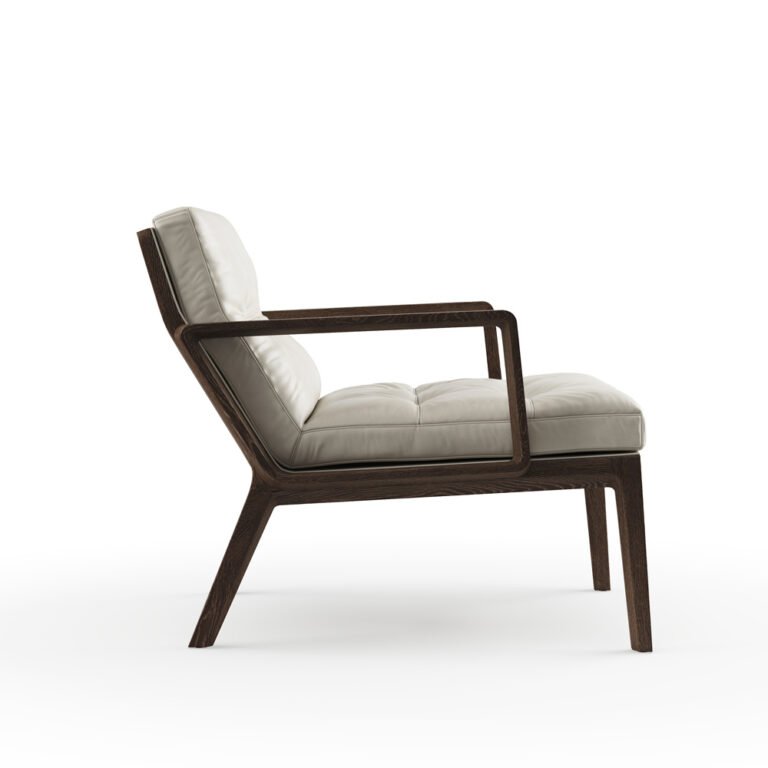
Furniture is probably the clearest example of multi-technique production. A manufacturer with dozens of models, finishes and upholstery options cannot photograph every combination. 3D rendering solves the variant catalog: the same piece in different woods, fabrics or colors without repeating studio sessions.
Photography is reserved for pieces that need real texture, such as a fabric with drape or a wood with pronounced grain, and for brand imagery. AI comes in for exploring settings and moodboards, or for varying backgrounds and atmospheres, always under human review. The result is a website and catalog where viewers cannot tell which image comes from which technique, because the lighting and style are consistent.
2. Architecture and interior design
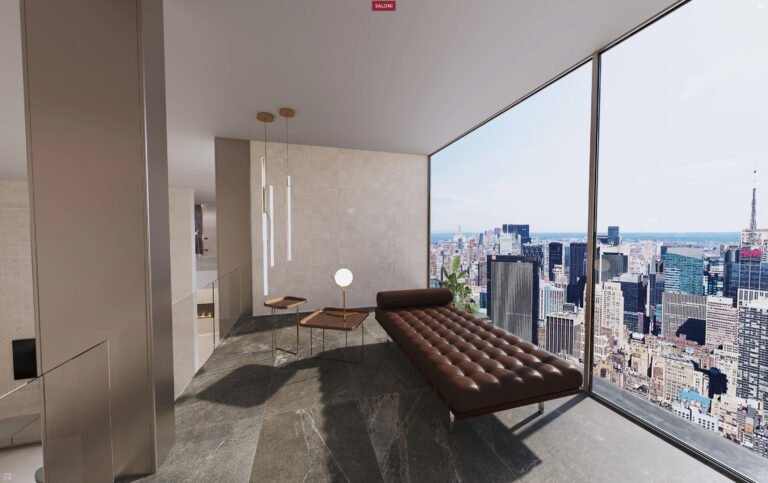
In architecture, the project is presented before anything is built, so rendering is the core tool. Studios and developers use it to visualize volumes, materials and light from the competition phase through to marketing.
Photography appears once the building is finished, and it is common to complete the portfolio with both: 3D imagery for what was sold off-plan and photography of the executed work. Photomontage is also frequent, integrating a rendered volume into a real photograph of the site or surroundings. AI is used in early phases to explore settings, palettes or style proposals before modeling with technical precision.
3. Fashion and accessories
In fashion, photography with a model remains the backbone of campaigns, because it conveys movement, drape and attitude. Digital layers are added on top: advanced retouching, photomontage of backgrounds and sets, and generation of color variants of the same garment.
3D is gaining ground in footwear, bags, jewelry and eyewear, where rigid geometry and materials allow a very faithful and consistent render. An entire collection can be shown with the same framing and the same light without organizing shoots for each reference. AI is used to explore campaign concepts and settings, and photography remains for whatever demands skin, fabric and emotion.
4. Industrial products and machinery
An industrial manufacturer starts from something it already owns: the product’s CAD files. That makes 3D rendering a natural route for technical catalogs, exploded views, section views and animations that explain how a machine works when it won’t fit in a photo studio.
Photography is kept for real installations, client references and the production plant, which add credibility. Combining both makes it possible to show the ideal product in 3D and the product working in a real environment. Retouching unifies the whole, and AI can help create usage scenarios or contextual backgrounds when no photographic material is available.
5. Cosmetics and packaging
Packaging with glass, metal, liquids and reflections is an area where 3D allows control over every highlight and every transparency. That is why many perfume and cosmetics brands produce the main product image in 3D and reserve photography for real textures: creams, powders or product drops.
Packaging, moreover, is validated digitally before printing. A render of the design applied to the container serves to present the proposal to the client or to compare finish alternatives. AI adds speed when exploring settings and campaign backgrounds, while retouching delivers the final finish at the quality the sector demands.
6. Automotive and mobility
The automotive industry has worked for years with digital vehicle models that launch before a photographable prototype exists. 3D rendering covers configurators, pre-production images and color and wheel variants, while photography of a real car provides road and studio authenticity.
A widespread technique is photomontage of a rendered vehicle onto a landscape photograph, or the other way around. This achieves a real background with a perfect car, without depending on weather conditions or travel. 3D animation completes the set in launch videos or technology explanations.
7. Real estate and residential development
Off-plan sales require showing homes that have not been built. Developers turn to exterior and interior renders, 3D virtual tours and animations to communicate the project, and to photography for the surroundings, nearby areas and, later, the finished building.
The combination makes it possible to adapt communication to each stage of marketing. First 3D images and photomontages on the real site; later, photography of the delivered development. AI is useful for testing decoration styles or settings in show homes, and retouching ensures that all the material keeps a consistent visual line across brochures, website and billboards.
8. Electronics and consumer technology
Electronic devices combine polished surfaces, screens, technical textures and very short launch cycles. 3D rendering makes it possible to present the product before final units exist and to show internal views or feature animations that photography cannot capture.
Product photography remains useful for real units, comparisons and review content, while 3D maintains consistency across generations and color variants. Agencies working for these brands often subcontract the 3D and retouching work to scale without growing their staff. In our case, we work as an external 3D, retouching and animation department for agencies, under confidentiality and without appearing in the credits.
9. How to tell if your sector is a fit
Beyond the sector, there are signs that combined production makes sense: the product does not exist yet, there are many variants, consistency is needed across hundreds of images, or the material must adapt to several formats. When one or more of these apply, mixing techniques is usually more efficient than relying on just one.
To see how they are combined in practice, it is useful to review multi-technique visual production projects, and to organize the work from the start it helps to understand how to plan a multi-technique project. The underlying decision is to assign each technique what it solves best: 3D for control and variants, photography for authenticity, AI for exploration and retouching for unification.
If your sector appears on this list, the next step is to gather your product files, references and usage needs, and work out with us which part is best solved in 3D, which in photography and where AI can help. With that material we can propose the most suitable combination for your catalog or project.